The police pamphlet
Hide, comply, and hope help comes in time. It isn't wrong. It's incomplete.
On her own in a new place, she's most vulnerable.
15 real-world lessons. 6 core safety skills. A few hours together.
She'll see trouble coming and carry herself so it passes her by. If it doesn't, she'll have your permission and the skills to make the right decision and the right move. You don't need to know any of this yourself. I'll show you both how.
Your free guide starts the talk. The Blueprint adds the complete guide, a 45-minute webinar, how-to videos, and short drills you do together.
Get the Complete Blueprint — $37One-time payment · Instant access · 60-day money-back guarantee
Here's one of the actual defensive responses you'll work through together. Step away from danger, create distance, and use your surroundings to gain an advantage while deciding what to do next.
No fighting background required. I demonstrate the skill, then you practice it together.
Get the Blueprint — $37A real lesson from the Blueprint: the Basic Defensive Response around a vehicle.
You can remind her to be careful a hundred times. But will she recognize warning signs, hold her boundaries, and know what to do under pressure? Those things can be taught and practiced. We teach first aid, CPR, and driving. No one teaches this, and no one taught you how to teach her. That isn't your failure. It's a gap a few hours together can close.
Small, high-value actions that fit her life. Confidence without paranoia.
She may not need any of this next week, or next year, or ever. But she could need one of these skills tomorrow. This is a few hours, once, so she has them before she needs them.
Hide, comply, and hope help comes in time. It isn't wrong. It's incomplete.
Martial artists, shooters, and operators each teach what they know, and most ask you to live like them: the gym, the gear, the constant vigilance.
A few hours, done together, built around her life. A system that plays to her strengths and covers her gaps.
This guide has been a great way to open up conversations I want to have with my daughter. She's not even in high school yet, but it raises situations I want her thinking about now. We went through the whole guide together, discussing each section, and it helped me learn things she'd been struggling with that I didn't even know about. I highly recommend this guide for every young lady and her parent.— Erin S., mother · Private training with her daughter, built on this material
Three steps you can do together, spread over a weekend or at your own pace. I provide the teaching and demonstrations. You help her apply them to her life.
She begins recognizing where she's vulnerable, what choices matter, and what she can do about them.
Start with the Core 6. Talk through situations she may face on her own and find out what she already knows. The guide leads the conversation with practical actions and questions; the full 15 lessons are there whenever you want to go deeper.
Why it's doable: Focus on the six essentials first. No lectures to prepare or curriculum to invent.
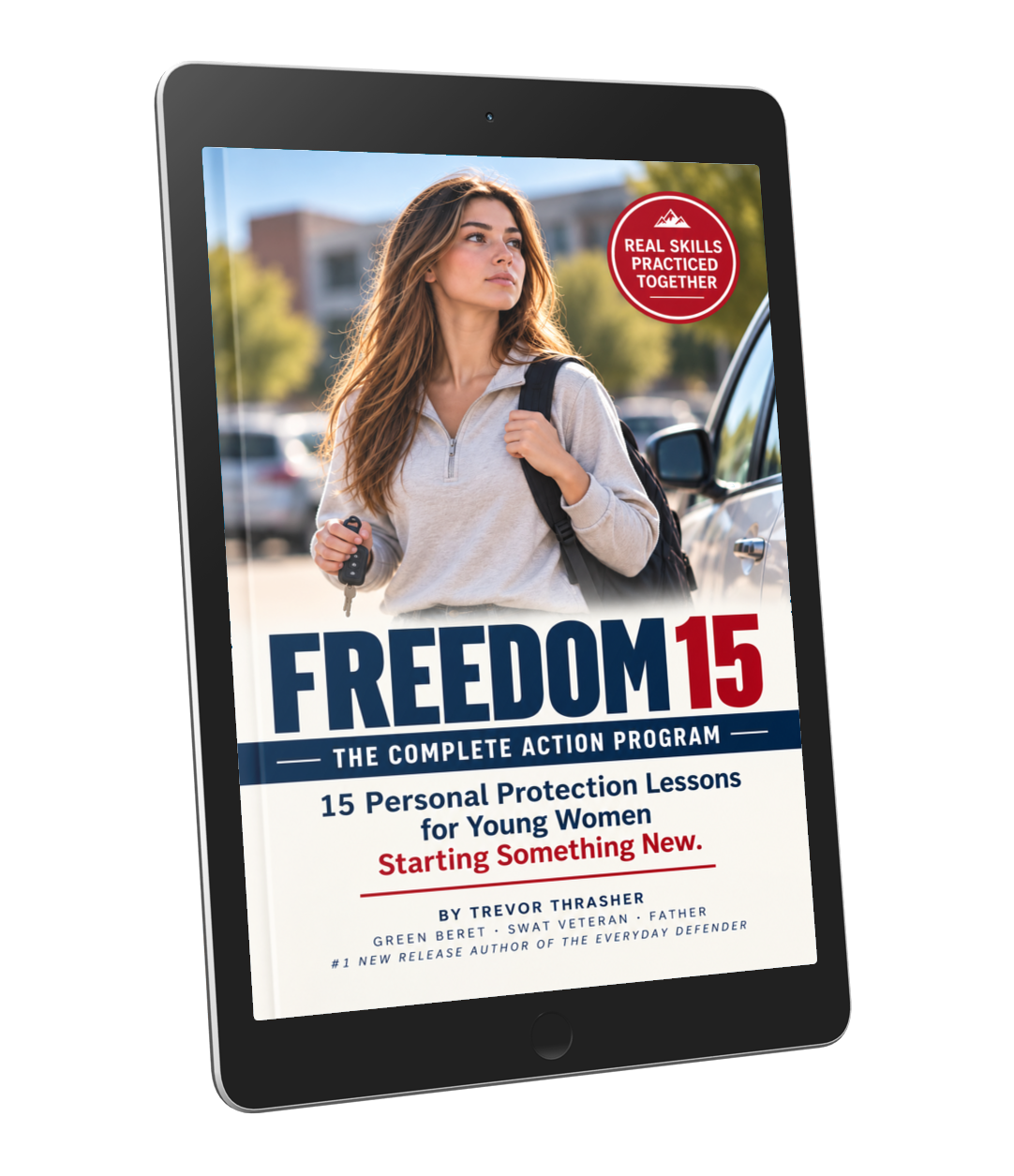
She learns to recognize danger sooner, understand her options, and make a better decision before the situation gets worse.
Watch my Victim or Victress webinar together. I'll explain the One-Breath Check and how the S.M.A.A.R.T.S. safety system works as a whole, the same system I teach to law enforcement, military, and executive protection pros. Then we'll go through three real incidents, a deadly rideshare mistake, a home invasion by a fake delivery driver, and a young woman fighting off an attacker at a gym, and find the decision points where seeing it sooner or acting differently could have changed the outcome.
Why it's doable: I explain the framework and work through the cases. You learn it together—no expertise required.
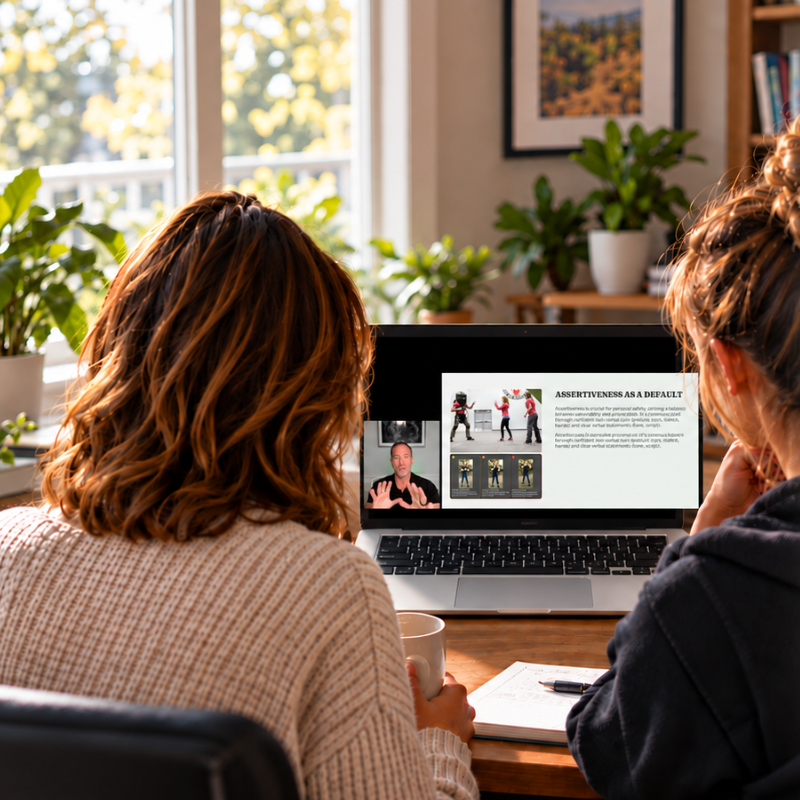
She goes beyond knowing the right answer: she practices the actions and demonstrates the Core 6.
Spend an hour or two following the embedded how-to videos. Practice assertiveness, recognizing danger, the Basic Defensive Response, and readiness. Time how quickly she can get her flashlight or inert practice pepper spray into her hand from where she normally carries it. The standard is the 3-2-1: three to five seconds or less, without digging through her bag. Make a few changes, then try again. Use the Core 6 Check to see what she's learned and what needs more work.
Why it's effective: You can watch her demonstrate the skills—rather than just hoping she remembers the conversation.

My wife Lauren's first try getting her tool into her hand took 6.5 seconds. After we made a few changes to how she carried and drew it, she hit 0.64. That's the same drill your daughter runs in the Blueprint.
By the end: you've had the important conversations, learned how the system works, practiced the skills, and seen what she can demonstrate.
One-time payment · Instant access · 60-day money-back guarantee
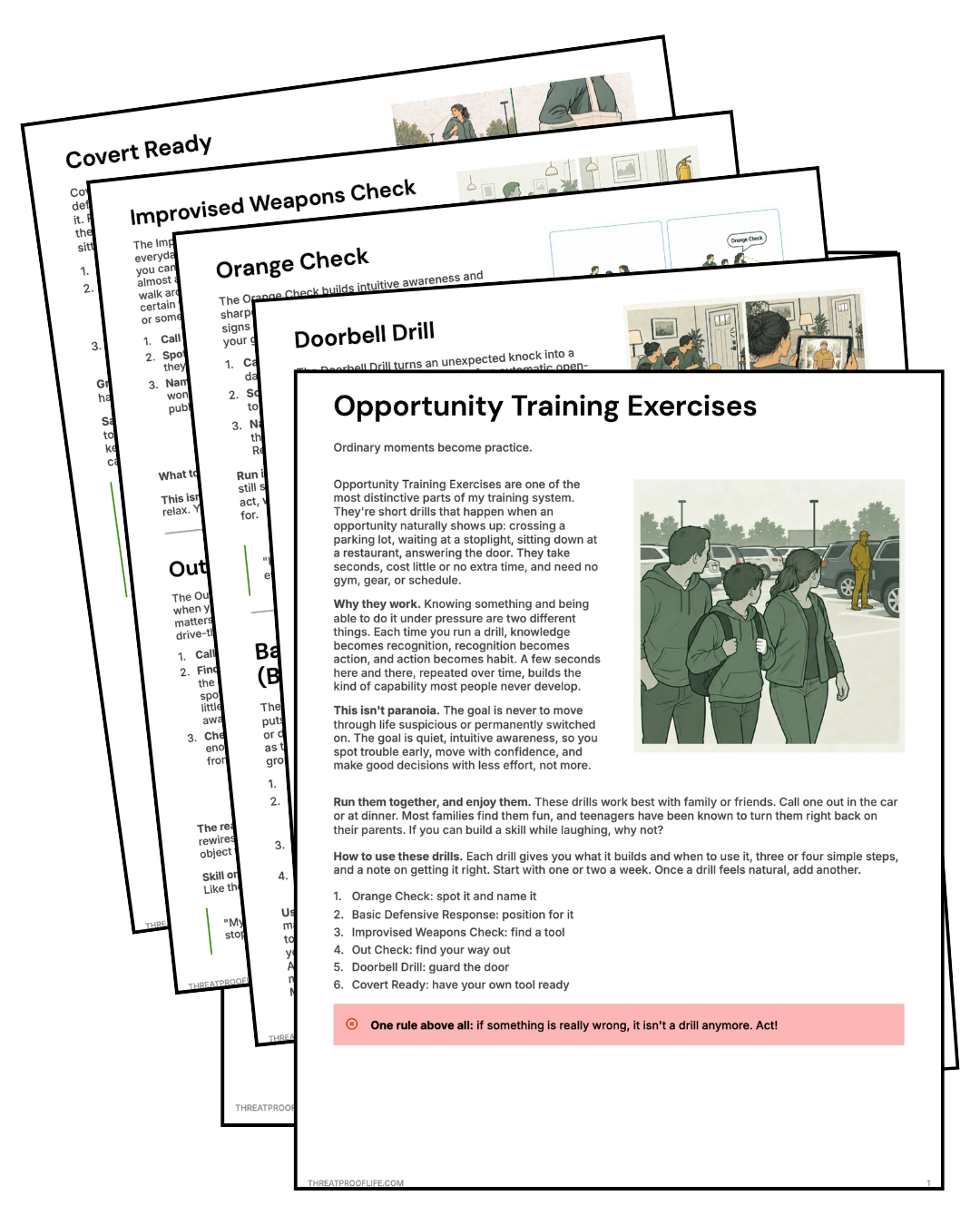
The six Opportunity Training Exercises turn ordinary moments into quick practice: the next unexpected knock, a stoplight, a walk through a parking lot, or a moment when something doesn't feel right.
Run a safe drill when an opportunity naturally appears. Try it again days, months, or years later. Challenge each other, compare what you noticed, and keep improving—without adding a new activity to the calendar. If something is genuinely dangerous, act to get safe; don't treat it as a drill.
Meaningful. Challenging. Fun.
Not fifteen disconnected safety tips. These six capabilities work together, whether she's on campus, at work, traveling, or living on her own.
She knows she has the right and responsibility to protect herself.
She knows what warning signs to look for and can name them quickly.
She looks like the one they skip. When she says no, they know she means it.
She carries an appropriate tool accessibly and knows when to prepare it.
She practices creating distance, improving her position, and choosing her next move.
She gets her tool in hand in 3 to 5 seconds or less, without drawing attention, then keeps improving.
The 15 real-world lessons put these skills to work in situations that come with life on her own: protecting her drink, rideshare rules, spotting a tail, never going to a second location, the spare phone, the digital predator, stopping the bleed, and more.

I'm Trevor Thrasher, a husband and father first, with more than three decades across Army Special Forces, law enforcement and SWAT, and counter-terrorism work for a U.S. government agency.
10 years teaching at 88 Tactical in Omaha. 30,000+ people trained, thousands of them young women.
I built this for families who don't have years to train. You don't have to teach like a professional instructor. You learn and practice alongside her.
Thank you again, super helpful, very effective skill building and empowering for both of us. Even a teenager, when we usually get eye rolls, was pulling the 3-2-1 reaction time to defense mode on me throughout the day.— Karla Franzluebbers, parent · Feedback from private instruction. The 3-2-1 drill: a three-count to get a defensive tool in hand.
My whole family has trained with Trevor and will continue to train with him. He is my go-to resource for civilian safety and professional first responder tactics.— Major Jared P., U.S. Army Special Forces, father of three
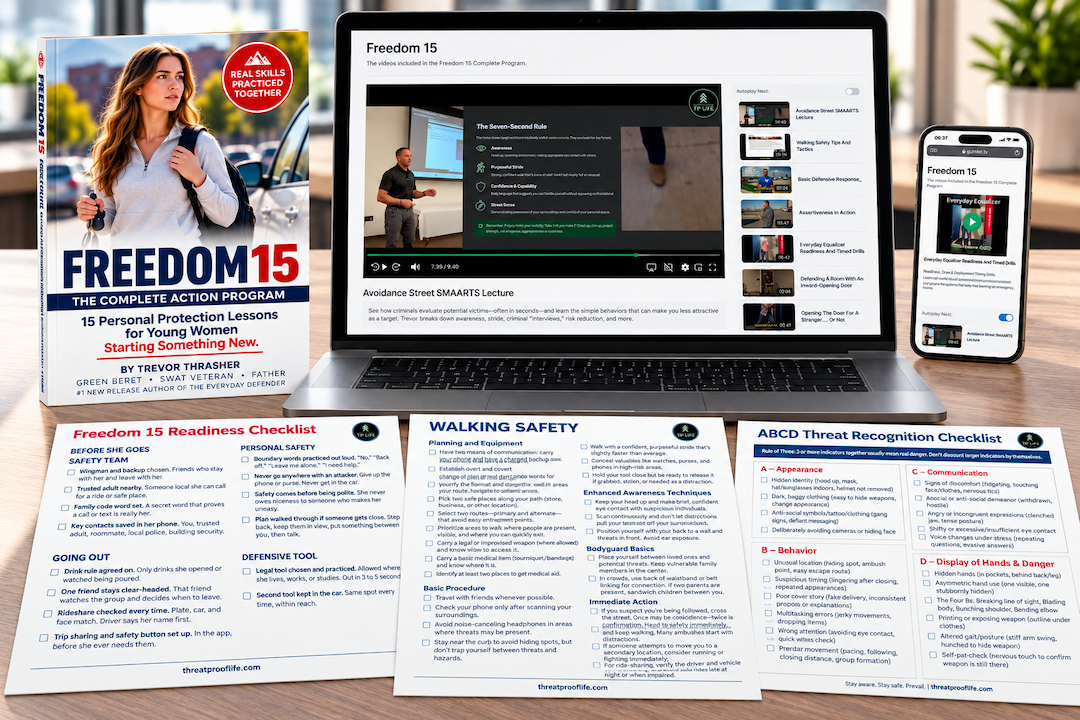
One complete path from conversation to practiced capability, for about the cost of an inexpensive lunch.
Any young woman from about 15 to 50, and the parent, grandparent, or guardian teaching her. A few lessons are age-sensitive, so you choose which ones to cover with a younger daughter. If she has already moved out, run it over a video call or do the drills together when you visit. You don't need a background in safety, only the willingness to sit down together.
No. Most of it is seeing trouble early and not being the one they pick. The main hands-on skill is getting whatever tool she chooses to carry into her hand fast, and you practice that with a stopwatch, not a sparring partner. It builds capability, not fear. No gym or fighting background needed.
You don't need to. The webinar and the video lessons do the teaching, and each drill tells you exactly what to say and do. You learn alongside her.
The practice is hands-on, the lessons are short, and the six Opportunity Training Exercises take seconds. Most families find the drills fun.
A few hours, spread over a weekend: an evening for the webinar, a couple of hours with the guide, and a couple of hours of drills. Or take it in pieces. One lesson and one drill still change what she can do.
Give her a system she'll understand, skills she'll practice, and a way to keep them sharp as she becomes more independent.
$37
That's about the cost of an inexpensive lunch. For it you get a few hours with your daughter, taught by someone who has spent his career on this, and skills she can use for life.
One-time payment · Instant access · No subscription
Secure checkout next · 60-day money-back guarantee
One system. A few hours together. Skills she can keep building for life.
No thanks, I'll stay with the free guide for now.